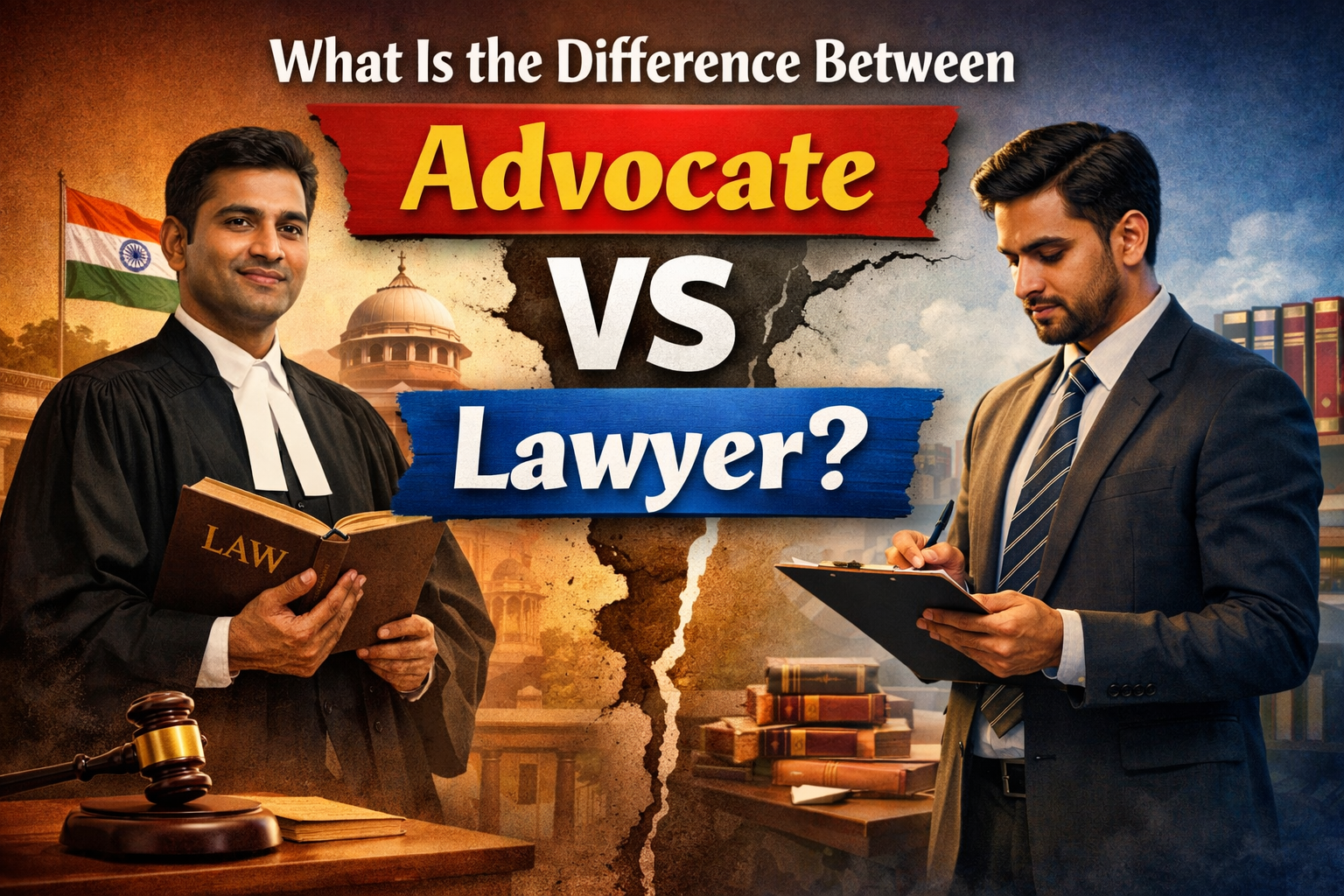
Many people in India use the words advocate and lawyer as if they mean the same thing. However, under Indian law, these two terms have different meanings and legal implications. This confusion is especially common among beginners, working professionals, startups, and local clients who are dealing with legal matters for the first time.
In this blog, we clearly explain what is the difference between advocate and lawyer in India using simple language, practical examples, and India-specific legal context so anyone can understand it easily.
What Is a Lawyer? (Meaning in the Indian Context)
A lawyer is a person who has successfully completed a law degree (LLB) from a recognized university in India. At this stage, the person has academic knowledge of law but does not automatically receive the right to represent clients in court.
Key Characteristics of a Lawyer
- Holds a valid LLB degree
- Has studied legal subjects such as constitutional law, criminal law, and civil law
- Can provide legal opinions and advice
- Can draft contracts, notices, and agreements
- Can work in corporate legal teams, compliance roles, or as legal advisors
Important to note: Simply holding a law degree does not allow a person to argue cases before a judge.
In simple words, a lawyer is legally educated, but not necessarily a court practitioner.
What Is an Advocate? (Legal Meaning in India)
An advocate is a lawyer who has taken an additional legal step that allows them to practice law in courts across India.
To become an advocate, a lawyer must:
- Enroll with a State Bar Council
- Be officially recognized to practice law
Are you a lawyer? Grow your practice.
- Follow professional standards and ethical rules
What Makes an Advocate Different
- Can appear before courts, tribunals, and legal authorities
- Can argue cases on behalf of clients
- Can file cases, petitions, and affidavits
- Is legally authorized to represent clients during hearings
This right to practice in court is the most important factor that separates an advocate from a lawyer in India.
Advocate vs Lawyer – Key Differences Explained Clearly
Educational Qualification
- Lawyer: Completes an LLB degree
- Advocate: Completes an LLB degree and enrolls with the Bar Council
Authority to Appear in Court`
- Lawyer: Not permitted to argue cases in court
- Advocate: Fully permitted to appear and argue before courts
Legal Status
- Lawyer: Holds an academic or professional qualification
- Advocate: Recognized as a legal practitioner under Indian law
Are you a lawyer? Grow your practice.
Professional Accountability
- Lawyer: Not governed by court practice rules
- Advocate: Subject to disciplinary rules and professional ethics
Is Every Advocate a Lawyer? Is Every Lawyer an Advocate?
This is one of the most frequently asked legal questions in India.
- Every advocate is first a lawyer
- Not every lawyer becomes an advocate
A person becomes a lawyer after earning a law degree. They become an advocate only after enrolling with the Bar Council and gaining the legal right to practice in court.
Difference Between Advocate and Lawyer in India (Simple Comparison Table)
| Point of Comparison | Lawyer | Advocate |
|---|---|---|
| Law Degree | Mandatory | Mandatory |
| Bar Council Enrollment | Not required | Required |
| Court Practice Allowed | No | Yes |
| Legal Recognition | Academic qualification | Statutory legal professional |
| Client Representation in Court | No | Yes |
Why the Indian Legal System Uses the Term “Advocate”
Unlike some other countries that use terms such as attorney, solicitor, or barrister, India officially recognizes advocate as the title for legal professionals who practice in courts.
This approach provides:
- A single, uniform professional identity
- Clear authority to represent clients in court
- Central regulation and accountability
When Should You Choose a Lawyer and When Do You Need an Advocate?
Are you a lawyer? Grow your practice.
Situations Where a Lawyer Is Sufficient
- Seeking legal advice or opinion
- Drafting agreements or legal documents
- Handling corporate or regulatory compliance matters
Situations Where an Advocate Is Necessary
- Filing a case in court
- Defending or prosecuting a legal matter
- Appearing before judges or tribunals
For any court-related work, hiring an advocate is legally required.
Common Misunderstandings About Advocates and Lawyers
Misunderstanding: Advocate and lawyer mean the same thing
Reality: An advocate has additional legal authority to practice in court
Misunderstanding: All lawyers can argue cases
Reality: Only advocates can do so
Misunderstanding: Advocates only handle litigation
Reality: Advocates can also provide legal advice and consultancy
Final Conclusion – Advocate vs Lawyer in India
A lawyer is someone who has studied law and holds a legal degree. An advocate is a lawyer who is legally authorized to represent clients in courts.
Knowing this difference helps individuals, businesses, and first-time clients make informed legal choices and approach the right professional for their needs.
At Justly.in, our goal is to simplify complex legal concepts and make Indian law easier to understand for everyone.